Pages

Wednesday, December 27, 2023

Sharing in Abandonment

 It's always there--like a cloud hanging over everything that happens in our homes.  The underlying reality that each of our residents (and some of our staff) have truly been abandoned and betrayed by those who should have loved them best.

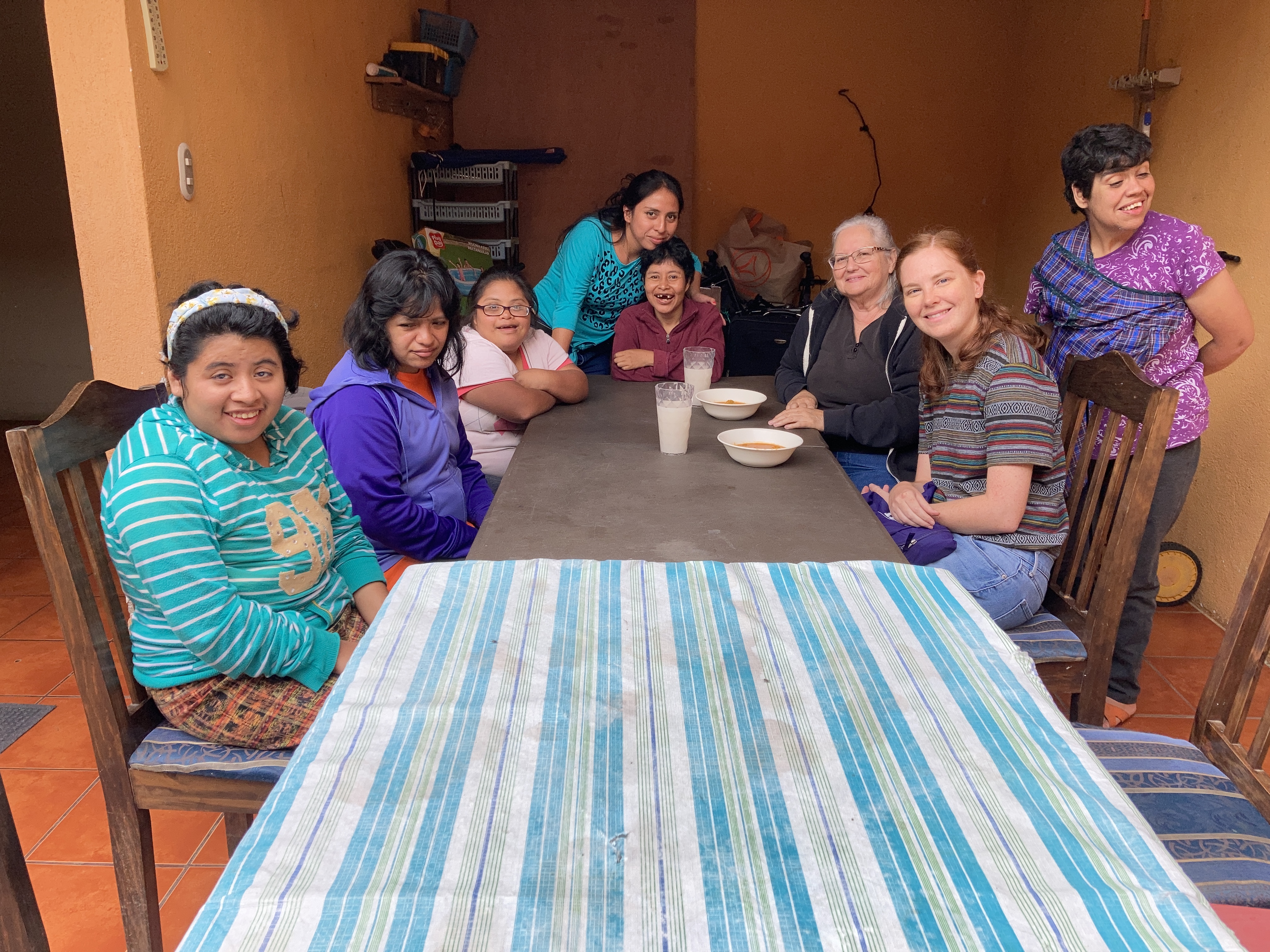
 While our Christmas celebrations were filled with fellowship and joy, there is always a tinge of sadness in what is missing.  Each person around the table realizes that we are not in a "normal" family.  Each person experiencing the pain that their birth families do not even reaching out to them with a text message to let them know they are loved and missed.

I want to say that the love shown in our homes heals this.  When we began Casa de Esperanza I somewhat naively believed that the love we offer, the fact that they are chosen to be loved by us, would eliminate this pain.  Each year I more deeply realize that the wound, though scabbed over, is still there. Our love will never totally eliminate their sense of rejection.  We try our best to help them know and experience the love of the heavenly Father who created them, but it's too often not enough.  Why would a loving Father let these terrible things happen to them?

 Special days like Christmas and birthdays tear the scab off, inflicting the pain of their losses once again. Each celebration needs to recognize and acknowledge this grief gently.  Each of us serving our men and women must enter into their grief, not "spiritualize" it away.  The pain of abandonment is real and persistent.  I believe this is the hardest part of our ministry.  It requires us to have faith that covers both of us at times.  

It calls us to walk into suffering in a unique way.  To recognize the truth of how profoundly they are loved by God.  To share with them concretely this love by the fact of our presence with them.  And at the same time know that we will never be enough.  

Yes, God is enough, but recognizing him in pain is hard.  So we sit and listen, sometimes for hours, on the patio while other are laughing inside.  We hold them as they sob for the family that does not acknowledge them.  To accept their anger at their situation without minimizing it.  We are challenged by our need to hold on to the truth of God's love for them, and us, while facing the pain unjustly inflicted upon them by others.  God gives us the strength to do this, but it takes a toll.

Today, the day after Christmas, I am exhausted.  Not by cooking and baking, but by the call to die to myself to live for another.  To willingly enter into suffering I don't own, but am called to share.  The same is true for each of our team members who do this so well, by the grace of God.

Would you take a few moments today, to pray for those of us who serve with Reason to Hope, to be lifted up, once again, on eagles wings and refreshed.  We need this.

Tuesday, December 12, 2023

The Meaning of Ministry


I was recently in a meeting where I was asked how Reason to Hope was a ministry.  I understood that the person inquiring was seeking to know how we were more than humanitarian aide.

I have to admit, however, the query took me aback.  Because I am so enmeshed daily in our ministry, I had to pause to think how I could accurately communicate why what we do is ministry.  This made me think, however, that maybe I need to make it clear to more than this one person what I believe, based on Scripture, ministry is about.  And then to explain how we fulfill this ministry.

First, and most importantly, I know I was called by God to serve the disabled in Guatemala.  Not just to evangelize them.  Wherever God calls is us ministry.


Others had shared the gospel with them before, and left them in the same physical situations (often despicable) in which they had found them.  Only spoken words, however true, could not impact their hearts when these folks were still living in environments where they were unloved, unaccepted, even pitied, or worse, rejected.

To interpret the Book of James to our context, God has convicted us of the following:

Suppose a brother or sister is lonely and rejected.  If one of you says to them, "Go in peace; be loved and accepted," but does nothing about their physical, emotional, social and spiritual needs, what good is it?  

In the same way, to tell someone Jesus loves them, without backing it up in action, is at best ineffective. To tell our residents that they are valued and loved by God, and walk away and live my comfortable life, while often they are in deplorable conditions, is hypocrisy at its finest.  To spend a few minutes daily giving them attention, and then walk away and leave them alone and isolated for the majority of their day does not make them experience love and acceptance.  


This reality is what birthed Casa de Esperanza and Hijas del Rey homes.  In our homes, our residents are surrounded by the love and acceptance found only in the love of God.  When we share Scripture, it has power. Our men and women experience the power of the Gospel daily, not only in words but in deeds.  We make disciples not only by teaching the Word, but by living it--loving them, and leading them to love God and others.  We may not reach many, but those we reach we reach profoundly.  Anyone who has spent any time in either of our homes can testify to this.


St. Francis says, "Preach the gospel at all times.  Use words when necessary." I would go even further and say, Üntil I preach the gospel in action, my words are useless and unnecessary."  We serve a Jesus who not only says God loves us, but backs it up in his actions.  Leaving the throne room of heaven, he surrendered to humanness,  meeting human as well as spiritual needs as he shared the truth of God's love.


Truly, the Great Commission is to go and make disciples (not converts, but true Christ-followers).  I believe, however, that to fulfill the Great Commission, we need to back up our testimony with the Great Command. 


When I love God with my whole mind, and heart, and will and strength, only then am I able to love my neighbor as myself.  And I demonstrate this love by meeting the human needs God places before me.  This is Biblically supported by the story of the sheep and goats in Matt. 25.  I canot share in words what I do not live out in service.


I never want to hear my Jesus say,
"Whatever you did not do for one of the least of these, you did not do for me."


Saturday, November 5, 2022

The Healing Power of Community


Last February we received an email from our friend, Daryl Fulp, asking if we would ever consider accepting another resident who was currently in Coban.  Their ministry, Hope for Home, had been providing diapers and formula for a 22 year old young man named Josué who was being cared for by his mother.  Unfortunately, she fell and broke her hip, went to the national hospital for care, and died while there, leaving Josué an "orphaned adult."  His needs far exceeded those of our other residents, but his situation was desperate, so we agreed to visit him.

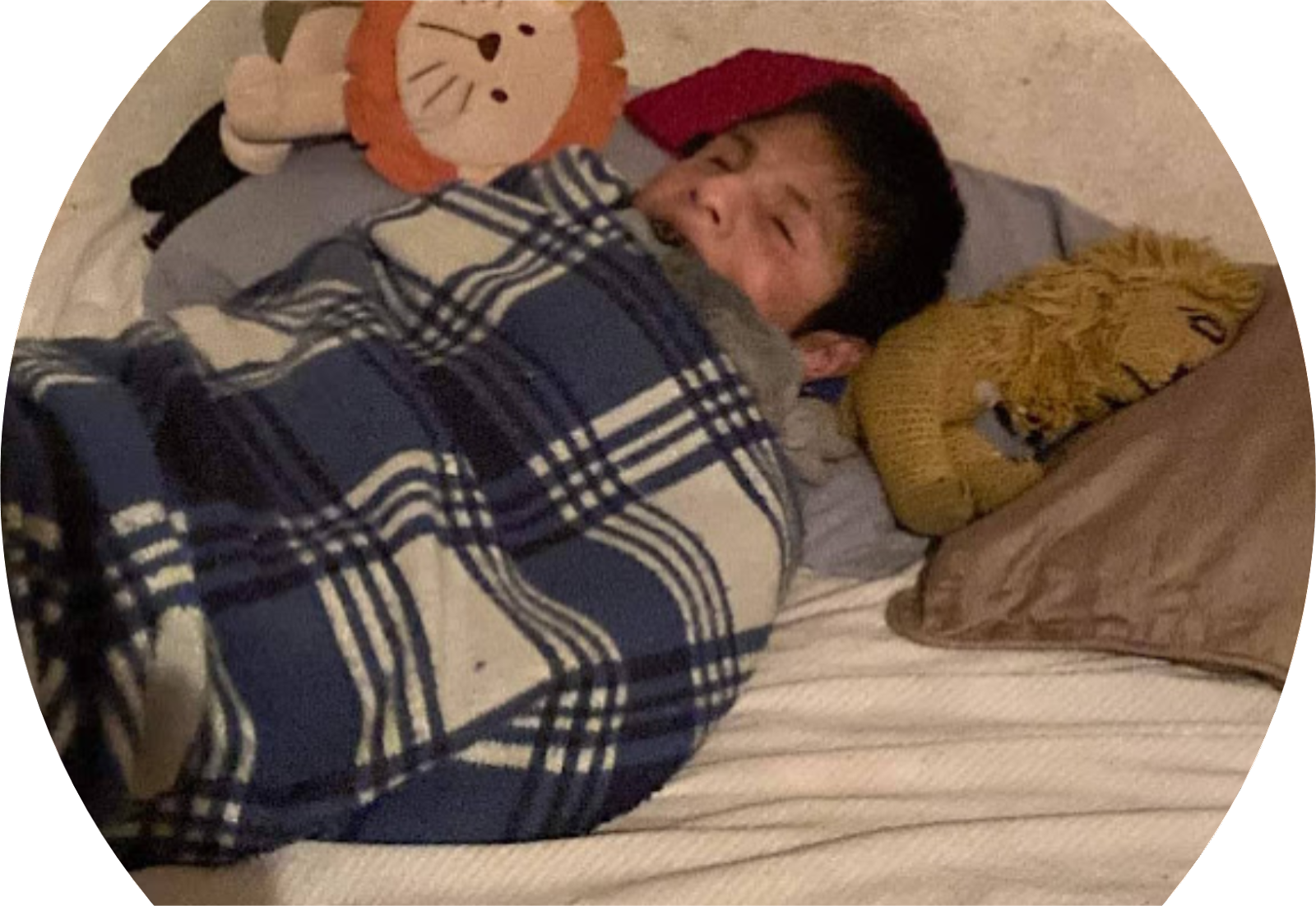
Josué was being "cared for" by an elderly friend of his mother and her developmentally disabled son.  Though I believe this 73 year old lady did the best she could with Josué, the condition we found him in was horrible.  He was severely malnurished, lying in a urine soaked bed, with a wash cloth tucked in his mouth.  

Upon meeting Josué we discovered that he was also blind.  Immediately I remembered a young girl I worked with who appeared to have autism but after being stimulated and educated quickly lost those symptoms.  I had hope that this would be the case for Josué, though bringing him into Casa de Esperanza would require significant adjustments from our staff.  

We knew, however, that we could not leave him where he was, and feared that if we reported his condition to local authorities, he would be placed in an institution where his situation would be the same, or even worse.  Both Dani, our resident director who accompanied me to Coban, and I agreed we would take him home with us.

Dani and Josué on the ride from Coban

To say the transition was challenging is an understatement.  When Josue arrived, he had no way of knowing what was in store for him, or if he could really trust us.  In addition, he was now living in a household with 6 other residents, and a lot of resulting movement and noise he was not accustomed to having.  He would frequently strike his head or face with his fists, and screech.  He was difficult to callm, and did not sleep well.  Our staff had to go over an above in caring for him, yet never once complained about his presence.  They are remarkable young men.


First night at Casa de Esperanza

With time and familiarity, as well as the advice of a friend who has worked for years with deaf/blind clients, we were able to orient Josué to our home.  We learned quickly that while he did not speak, he understood everything that was said to him, although Spanish was his second language. (His area of Guatemala speaks a Mayan language and this is what was spoken in his home).  

We soon found out that he could eat solid foods if they were cut in small enough pieces, and he quickly learned to chew.  We introduced him to Coke, and we exuberant when his first word spoken to us was "coca." (Thanks to Moises' excellent tutoring skills!)


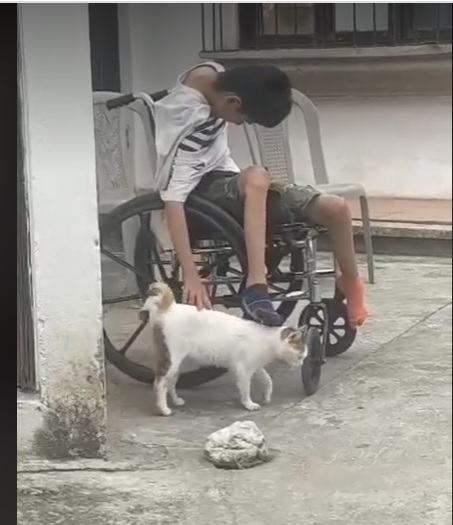
Today, after six months with us he is a different young man.  He loves our animals and seeks them out, locating our cats by their purring.  He is beginning to walk with a walker, sleeps well, and no longer feels the need to hit himself in frustration. 


I can unashamedly brag about his progress because I have played only a periferral role in his care.  Our amazing staff has does all the heavy lifting and most of the research into how to best help Josué.  I could not be more proud of them, or thankful to God for the amazing group of caregivers he has provided for us.  Our other residents quickly accepted him and have also assume some caregiving roles with him.  Looking at them I can't help but see the healing power of Christian community and stand in awe of the power of love and acceptance in healing a broken heart.


Tuesday, September 27, 2022

Building a Bigger Table


 When someone asks me how many residents we will accept in each of our home, I always say we are at capacity.  Then, God presents us with a clear need and invitation to join Him working in the life of an individual, and we say yes.  Sometimes joyfully, sometimes grudginly, but we say yes.

Please don't take this to mean that whenever someone asks to come live with us we immediately agree.  We have criteria for those whom we can adequately serve, and don't go outside those parameters.  Sometimes, though someone comes to us, and it is absolutely clear that they are either being abused or will not survive without our care.  As a team we discuss this and pray over it, and if it is clear it is God's invitation to join in what He is doing, we accept it, trusting His provision.

This has happened twice in the past six months.  And, now that these two folks are part of the Reason to Hope family in Guatemala. 

Last March we were contacted by a fellow missionary asking if there was any way we would consider taking 23 year old Josué into our home.  He has cerebral palsy and was thought to be autistic.  (Upon arriving to meet him, we discovered he was also blind.) 

His mother had cared for him as best as she could, but died in the national hospital in Coban after breaking her hip.  (Yes, here you can easily die of a broken hip.)  He was now being inadequately "cared for" by an elderly lady and her developmentally disabled son.

Josué's transition to Casa de Esperanza was not easy, but six months later, he is a completely different young man than the one who came to live with us. 


Then, last August, we received an email from the director of a center for individuals with additional needs at Lake Atitlan.  I have visited this center in the past and knew the staff to be both capable and caring.  Seno Viviana asked if there was any way we could accept an 18 year old woman who attended their center.  When the staff had visited her in the home of her aunt who was caring for her, they found her locked in a room and were told the key to the room could not be found.  When they finally did get in to see her, they found her lying on a dirt floor, with only a piece of cardboard for a "mattress" and a thin rag for a blanket.  Would we help?

Aracely is developmentally delayed, but quite independent and without physical limitations.  After interviewing the staff at the center, we decided to accept her on a trial basis.  The staff was thrilled, and made all the arrangements for her to come and live with us, as well as provided the needed medical exams and transportation.

Adjusting to living with four other young women as well as the three staff who live at Hijas del Rey has been challenging for Aracely.  She tends to withdraw into herself when scared, angry or frustrated.  She often fights for control when she feels insecure.  But gradually she is learning that she is safe and will be well cared for and is beginning to trust more and "fight" less.  She is becoming a contributing member of our family at the women's home, and beginning to make friendships with the other residents.  The trial visit has proven successful, and she has joined our group permanently.


As I was writing this post, I received an inquiry requesting placement for a 22 year old man with osteogensis imperfecta (brittle bone disease).  He grew up in an orphanage, and "aged out" at 18 years old.  He returned home to live with his father where he is often left alone for long periods of time and seldom given food.  We will evaluate him to see if Casa de Esperanza would be a good fit for him.

How will we respond?  I honestly don't know.  What I do know is that with each new resident, the cost of operating our homes increases.  While this is not the deciding factor, it is a consideration, and a reality which we must face.

Both our homes have the physical space for more beds, but with the addition of each new resident it seems our  structure becomes a little more rigid, and a bit more "institutional." I do know that for every one person we include, there are 20 more in Guatemala in an equal state of need.  Ten homes like Casa de Esperanza and Hijas del Rey could not satisfy the demand.

We cannot meet every need, and we don't go looking for more residents.  However, when God puts someone in front of us, inviting us to obey and serve Him by caring for that person, we dare not say no.  

So, where will it end?  I don't know.  I know that 12 years ago Casa de Esperanza was not even a dream, and now we stand with eleven residents and an equal number of full time staff members.  And God has provided as we respond to His call.  So as He continues to call, we will give our "yes" and trust Him to do the rest.


Thursday, September 1, 2022

To fail to welcome is to reject

Please know, I am not accusing anyone or any particular church of conscious indifference in this blog post.  I have been part of some these unfortunate decisions, or have remained silent when these incidents occurred. I am only asking each congregation (members as well as pastors) to examine themselves to see if they are guilty of tunnel vision which has indicated to those with additional needs they are not welcome at your table.  

When we say to someone "There is no room for you at our table" we are telling them, by our actions, that they are insignificant and unwanted.  

While most churches would never think of doing this consciously, too often this happens as a result of unrecognized indifference or passing judgment.  We focus on our current programs, activities, budgets, and objectives, and often fail to see the ministry opportunity to which God is inviting us.

Most of us have probably heard the story of the new pastor who waited in the worship center for his congregation, disguised as a homeless man, only to be scorned. Imagine the shock they felt when he revealed his true identity to them. While this has been shown to be an urban legend, it does give us reason to pause and reflect on our own church family.

We may think our church is different, but are we really?  This rejection by indifference or judgment can be focused on anyone who is different--the poor, the non-English speaker, the unwed mother, the recently released convict.  Yes, we recognize they need Jesus, but we want them to find him in some other church.  We say we are protecting our congregations (where is that found in the Bible?), but in reality we are protecting our comfort and our strategies.

For years now I have shared the lack of access to facilities and services for those with additional needs here in Guatemala.  God has convicted me that in 2021 I need to be personally congruent in sharing the rejection those with disabilities face in America as well.

Nowhere have I seen this exclusion of those with additional needs1 needs occur more obviously than among evangelical churches in their ministry (or usually lack thereof) to who have physical, sensory, emotional, behavioral, or psychiatric challenges.

Two families from my home church who had teens with a significant disabilities and challenging behaviors were told their child could not attend youth group, and these young men were placed in children's ministry.  One of these was asked to no longer attend because he would become agitated and posed a real risk to the children.  However, no one on the pastoral staff, particularly the youth pastor who should have felt responsible for disciplining this young man, sought to find any way to minister to this young man and his family, because he did not fit into the existing structures of the church.

Another mother of a preschooler needed to walk her wheelchair bound daughter around the large church facility, outside in the winter in Nebraska, because the preschool was on the second floor and there was no elevator.

A man with mental illness who would blurt out during the sermon was barred from worship because he was disruptive.  A family with a newborn baby with significant medical needs could not attend church because the church would not provide care for him (fear of liability) though two intensive care nurses volunteered to care for him in the parent's absence.

The most glaring evidence of this lack of welcome occurs in the responses of churches to the 1990 Americans with Disabilities Act.  "The ADA was meant to provide more access and civil rights to this minority group.  The sad reality is that 'churches and other religious bodies lobbied to be excluded from its requirements' and all places of worship were granted such exemption, thanks to section 12187." (Robb, 20212) 

Yes, some churches made accommodations, usually for those in wheelchairs, but seldom were people in wheelchairs involved in deciding what these accommodations would be.  Often the manner in which these accommodations were made, while complying with the law, were not useful to the person in a wheelchair.3

You might say these are isolated incidents occurring in churches that had no resources to meet these additional needs.  However, most of these occurred in my former home church--many, I'm ashamed to say, while I was a staff member.  A church with more than adequate resources if they chose to welcome these individuals who are made in the image of God.  I grieves me to know that this church which discipled me so well and I have loved for years, which cares greatly for reaching the lost, is missing the opportunity to serve an unreached people group living in their own neighborhood. 

And, since I firmly believe that one should not point out a problem to which one does not have a solution, I will, in my next blog post, share ideas for addressing each of the needs mentioned above in creative responses which would require little, if any, budget increases.

Our mission at Reason to Hope is:

"To improve the lives of the poor and those with additional needs, now an for eternity, through discipleship, education and social services."  

In the coming year, as I begin my 13th year in Guatemala,  I want to be fully congruent with each part of this mission to the glory of God.  Will you join me?


1 I choose the term additional needs because it believe it more accurately reflects the situation faces by people with disabilities.  Their basic physical, emotional, social and spiritual needs are the same as those we would describe as “typical.”  The difference lies, however, in the additional resources they need to meet these basic needs.


2 Laura Robb is a young woman I had the pleasure of chatting with at a Summer Institute on Theology and Disability.  I had been acquainted with her blog, and meeting her in person challenged me to begin to think differently about how I approached my own ministry.  She is a strong advocate in for the disability community and is currently writing blog posts about including those with additional needs fully in the life of the church.  


3 For example: a narrow bathroom stall requiring one to do a 180° transfer to sit on the stool; handicapped parking stall with a ramp at the top of the stall, which is inaccessible once a car is parked in that location; a “wheelchair accessible” sink with an “apron” in front of it, making it impossible for a someone in a wheelchair to comfortably get close enough to wash their hands.